
Let’s dive into relationship teachings this month.
From a Taoist perspective, relationships are not something we possess; they are something we continually participate in. Like rivers, they flow, change course, deepen, become turbulent, and at times grow still. Suffering begins when we insist that a relationship must remain fixed while life itself continues to move. Our lives blossom as we allow the relationship and each partner to grow and move with our experiences.

Sign Up For Our Newsletter
Over the last 25 years, the very basics of relationship & dating standards have been changing in real time, faster than ever. For example, same-sex marriage became legal for the first time in 2001 in the Netherlands and then for the entire United States by 2015. We have seen situationships become a new baseline relationship model for Gen Z. The language around dating and relationships has expanded exponentially over the last 20 years. Countless new dating options exist for meeting partners, and yet people feel more disconnected than ever.
Despite all of these new ways to connect, the timeless questions remain the same: How do we build healthy relationships? How do we know when a relationship is right for us? And how do we continue growing together rather than growing apart?
Casey Insight #1: Your new relationship ahead looks nothing like your parents’ relationship anymore!
A simple truth: a person’s baseline relationship is often a reflection of a person’s cultural/family experiences more than their personal needs. When the fundamentals of a culture and family change, the way people embrace their relationships also changes. So with all of the cultural turmoil happening right now, it’s a good time to review relationship basics.
Relationship Truth #1: Understanding the difference between your actual relationship needs versus what you were taught to hold will open you to finding more graceful partnerships.
Many people spend years trying to recreate the relationship model they inherited before ever asking whether that model truly fits the person they are becoming.
Here is the song list for this month’s newsletter:
- The Scientist – You can’t distill relationship truths to simple black-and-white answers.
- The Shape of You – The baseline of a relationship is chemistry.
- Save Tonight : Embracing each moment in a relationship even if you need to leave – The truth of our intermediate relationships.
- 49 Bye-Byes – Moving on in Relationships
Relationships & Dating
We all have issues in life. The challenge in finding a life partner isn’t finding the perfect person, nor changing another person to fit you, but rather finding the person whose issues match and complement your issues. Compatibility isn’t about having no differences. It’s about knowing which differences matter.
Casey Insight #2: Relationship work is all about issue management. Healthy relationships don’t remove our issues; they give us a safe place to grow beyond them.
Let’s be honest: comparing issues on your first date is a terrible first date outing. However, first-date red flags are very easy to spot, and pay attention to that truth. I discovered that out of 50 first dates, usually only 1 or 2 will turn out to be fun and worth going to a second date. So in dating, it’s best to be choosy.
Casey Insight #3: A first, second, or third date is not a relationship! It’s an experience to share a brief moment with another person. Dating is not a commitment. Dating advice and relationship advice are two separate topics! If your date begins talking about relationship problems (a major red flag), run away, run very fast and far, and don’t look back. Dates are not about becoming someone’s therapist.
Yet people treat dating as a relationship. Yes, 25 years ago you would say a second date was the first step of an early relationship. That is no longer true today. Dating is chemistry discovery. Until chemistry connects naturally, there is no lasting relationship to build. This means dating is pre-relationship weeding. Don’t plan on keeping the weeds, the relationships with no chemistry that only drain your resources. Dating means you are going out to get to know another person and share a single moment in life. That’s it! The idea that a date should lead into a relationship is a trap that pushes many dates into later relationship disasters.
Yes, people date to find a potential soulmate, but let’s put this into perspective. Looking for a needle in a haystack that may not have a needle in it is a very bad plan for finding a needle. The same truth applies to dating. People make the mistake of thinking dating is all about finding a life partner. However, 80 percent of the dating process is the accumulation of life lessons: to discover the nature of bad chemistry and what to avoid in your future partners! Your future partner will definitely not be in a haystack, nor a bar, nor a profile listing. They’re out living their life fully just as you should be. As you flow through life, you avoid those who don’t match your chemistry, and when chemistry does spark, then dating becomes a test of the spark to see if it has enough fuel for a relationship.
As you learn life lessons from dating, it actually improves your life. The better your own life becomes, the more likely you’ll naturally cross paths with people whose lives are moving in the same direction.
I must stress that the first fundamental challenge does come down to chemistry; more people around you don’t match you or your issues than you realize. So assuming that a random person could be a good match is a fatal mistake. By learning what doesn’t work, you can pre-weed out bad matches and not waste your time with poor matches over time.
Casey Insight #4: Dating isn’t about discovering a partner; it is about experiencing life, making occasional friends and, along the way, discovering what doesn’t work so you avoid poor future partner choices.
Relationship Fundamentals
Now, let’s take a step back and understand the fundamentals of a relationship. A Relationship has three basic components.
- Chemistry – Are you compatible with the other person? The roots of the Tree of Love.
- Connection – Are you able to connect in a healthy way? Is there open communication, harmony, and respect between two people? These are the branches of the Tree of Love.
- Growth – Love is to be more. The leaves in the Tree of Love represent love itself and the growth that comes from it.

Notice that love itself is not the root of your relationship! People often think love forms the fundamental roots of a relationship. It doesn’t! Love grows out from healthy chemistry and healthy connection. Growth is what keeps love alive. When those foundations weaken, love eventually struggles as well.
This Tree of Love model makes it easy to see that chemistry, connection, and growth are the baselines of a healthy relationship. When those elements are not present, you are in an unhealthy relationship that will not make it in the long run.
Situationship Basics
I have been teaching quite a few people over 40 years old how to embrace a situationship. Each situationship is unique between two partners. When embraced with non-judgment and gratitude, situationships are very healthy, stable, and flexible. As soon as one person in a situationship tries to force a situationship towards a committed traditional relationship, it usually ends very quickly.
It’s a bit hard to put what a situationship is into words since it embraces respectful space, nonjudgment, and a limited set of rules.
- A relationship based on freedom for each partner to be their own person.
- A relationship that allows each person space.
- A relationship that doesn’t come with legal entanglements.
- A relationship that can be released without words or battles.
- Situationships do embrace some commitment, but the commitment is based on each person rather than cultural rules.
- The commitment in a situationship is based more upon respectful actions than words.
- The commitment in a situationship is more about friendship with freedoms rather than being a focused partnership.
- Situationships grow organically over time rather than being predefined up front. Rather than forcing a relationship into “We must do this!” situationships ask “What can we help each other do in life?”
- Situationships allow each partner to have different long-term goals.
- Situationships aren’t polygamy nor swinging. Healthy situationships define exclusivity intentionally rather than assuming it. Some are exclusive, while others openly agree to different arrangements.
- The Tree of Love teachings still apply to situationships.
Relationship Truth #2: The absence of labels in a situationship doesn’t remove the need for honesty. Freedom without honesty isn’t freedom; it’s avoidance. A healthy situationship requires clear, open communication because a relationship based on assumptions only creates endless conflicts from misunderstandings.
A situationship is not simply a relationship without commitment. It’s a relationship where commitment develops through actions rather than predefined expectations. Like all relationships, some situationships are healthy, and some are unhealthy.
A situationship is a very Taoist construct because it leaves a relationship open to the unknown while embracing the ideal that it’s acceptable not to predefine everything that is expected to happen later in your relationship.
A situationship can become a spiritual marriage more easily than a traditional marriage. A spiritual marriage is not defined by legal status but by the ongoing willingness of two people to continue growing together. It’s possible to turn a marriage into a situationship. If you want to do this, you can use our spiritual divorce teachings as a roadmap to transition from the marriage into a situationship.
I believe situationships are evolving to give people a chance to have three things at once:
- A lower maintenance central healthy relationship with a key person in your life.
- More personal space.
- Time to explore the world outside of your primary relationship
“The bond that links your true family is not one of blood, but of respect and joy in each other’s life.”
-Richard Bach
A relationship is a connection into a larger shared life. Love is to be more. So relationships and love get entangled together. We can feel love for everything around us. One trap of an unhealthy relationship is limiting love to only one relationship. Love, by definition, is more than your relationship. When we reduce love to only one person, we unintentionally shrink one of life’s greatest forces. Healthy relationships should expand our capacity to love life itself, not reduce it.
Casey Insight #5: Once I allowed myself to feel love outside my relationships, my whole world expanded a thousandfold.
Intermediate Relationships.
Save tonight and fight the break of dawn
Come tomorrow,tomorrow I’ll be gone
-Eagle Eye Cherry : Save Tonight
Some relationships are forever. Other relationships teach us a lesson for forever.
One truth: only our final relationship in life lasts a lifetime. People try to make every relationship the last. Yet we need our intermediate relationships, because each relationship teaches us a valuable life lesson, helping us to move and grow beyond our issues in life.
Relationships are both a chance to improve and learn how to grow past our issues in life. This is counterintuitive since people tend to use relationships as a way to shore up their weaknesses and then ignore their issues. If you use a relationship to shore up your weakness, that is co-dependency, and co-dependency always burns out a relationship.
Relationship Truth #3: Every relationship ending leaves behind either wisdom or resentment. The choice of which one we carry forward belongs to us.
An intermediate relationship is not about the length of time; it’s about learning your life lesson. My first marriage was an intermediate relationship that lasted over a decade. From that relationship, I learned the lessons that led me to create the Tree of Love teachings. Yes, my first marriage failed, but it was successful as an intermediate relationship, and I am grateful for what I learned to help me heal from some of my own issues. If I only held my first marriage as a failure, I never would have become a successful relationship coach. Because I held my first marriage as a learning experience and as an intermediate relationship, I grew and moved on to improve my life.
“Ever has it been that love knows not its own depth until the hour of separation.”
-Khalil Gibran
Relationship Truth #4: When you hold on to a past relationship as a failure, it prevents you from learning life lessons and growing.
The more we embrace our valuable intermediate relationships, the faster we grow in life.
Casey Insight #6: We are the growing sum of all of our relationships in life. Each relationship, even the failures, even the temporary relationships, is a critical part of our life journey in becoming a better person.
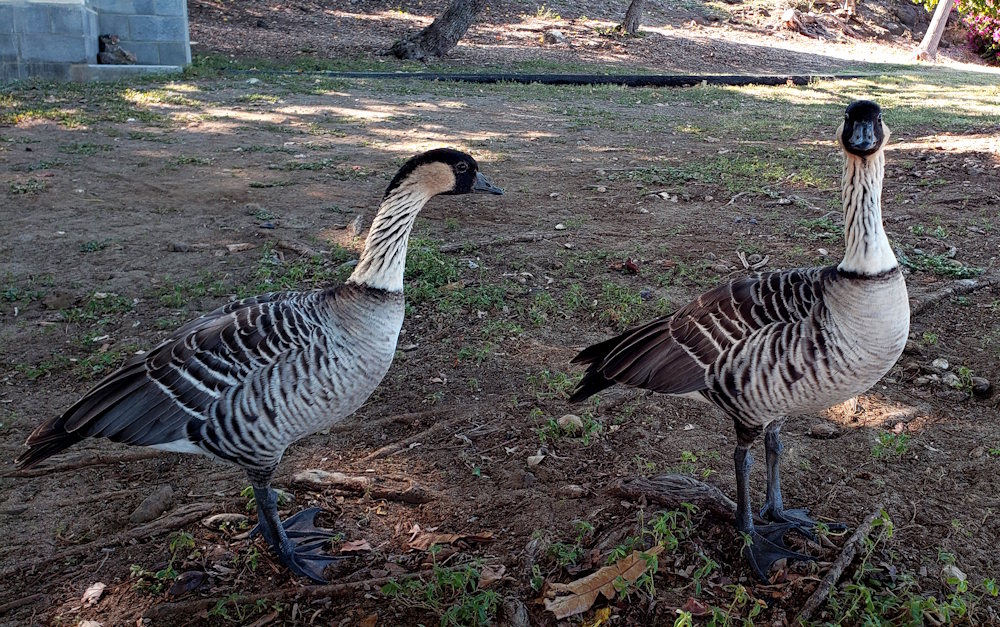
Nene – The State Bird of Hawaii- They mate for life, no situationships for Nene.
After the Honeymoon
After the magic of your early relationship is over, our hidden issues come out. The honeymoon doesn’t end because love disappears. It ends because reality finally has room to enter the relationship. This is when a relationship truly becomes a dance of issue management as we strive to keep growing with each other.
Relationship Truth #5: As people change in life, their relationships also need to change. Relationships break when partners don’t evolve with each other. A deep relationship secret to a successful long-term relationship is learning how to change your relationship over time. In my experience, couples need to consciously redefine their relationship every few years as life changes.
As careers change, children arrive, health changes, dreams evolve, and people heal from old wounds, the relationship itself must be consciously redesigned to fit each person’s new needs in life. Relationships that refuse to evolve slowly become prisons built from yesterday’s agreements.
Casey Insight #7: Our issues are not static! Shifting personal life challenges also impact our relationship balance. This is a hidden reason a midlife crisis can destroy a relationship. Hidden childhood trauma that comes back to the surface during midlife awakening can easily break apart a relationship.
Casey Insight #8: When change forces a person to start making choices to live a healthier life, one of the harder choices they then face is also how to be in healthier relationships.
One of the first challenges you will face in a longer-term relationship is making small compromises to minimize relationship issues. I’m not referring to everyday acts of kindness or flexibility. I’m referring to repeatedly sacrificing your authentic self to avoid confronting deeper relationship issues. I have discussed compromise in the September 2025 – Compromise in Relationships newsletter.
Relationship Truth #6: Understand that the first time you come across the need to compromise is actually the signal to start growing against your relationship issues!
Conclusion: Embracing Acceptance within Relationships
Whether your relationship lasts three months or fifty years, every healthy relationship should leave you more alive, more accepting, and more yourself than when you entered it. If a relationship consistently requires you to become less than yourself, it’s asking you to move away from, not toward, love.
I will leave you with a final poem I wrote for myself to understand dating back in 2004. The core truth that gave me peace was to go deeper into acceptance by embracing the issues at play and growing, rather than cutting yourself or a partner down to fit each other’s appetites and needs.
Dancing around
gentle swaying air
under the sun
a flower.
~*So simple
so complicated deeper,
looking ultraviolet
discover faint intricate traceries
new patterns of attraction, landing pads
networks of lives coming, going, feeding into pollination
frenzied frenzied life beats, becoming seeds
waiting towards bursting futures
all this and more…
as
a simple waiting flower.Love
Why does love get placed under a microscope?
It’s so tempting:
Tasting apple bits, bites,
connections, attractions,
rational examinations,
complicated dissections
conducted with steel scissors and tools.
To place the flower into: a vase…
so we can watch it die, in agony.
Acceptance and understanding
are not the same thing.
Let’s together stand under
the sun, washing rains
dancing swaying air
accepting our natures
being the flower.
*~-Casey 2004
Final Concluding Insight: The healthiest relationships don’t ask, “How can I keep this person?” They ask, “How can we continue becoming people who naturally choose each other?”. The goal isn’t to find someone who completes you. Rather, the goal is to become more completely yourself while helping another person become more completely themselves.
Every relationship, whether it lasts a season or a lifetime, invites us to become a little more human.